DNA analysis
Our DNA sex determination is based on the modern and reliable PCR technique.
About the method
Most bird species are dimorphic, which means that it is impossible to determine the sex of an individual at first sight. Modern genetic testing is therefore necessary to accurately determine sex. To determine sex in birds, we use an advanced PCR (Polymerase Chain Reaction) method that is very accurate. This technique allows the multiplication of a section of DNA and the subsequent detailed analysis of a specific gene.
Minimal invasiveness: thanks to the high sensitivity of the PCR method, only a small amount of genetic material, such as a drop of blood, is needed for testing.
Broad application: PCR is globally recognised and used in many fields, from infectious disease diagnostics and biotechnology applications to forensic criminalistics, which guarantees its reliability.

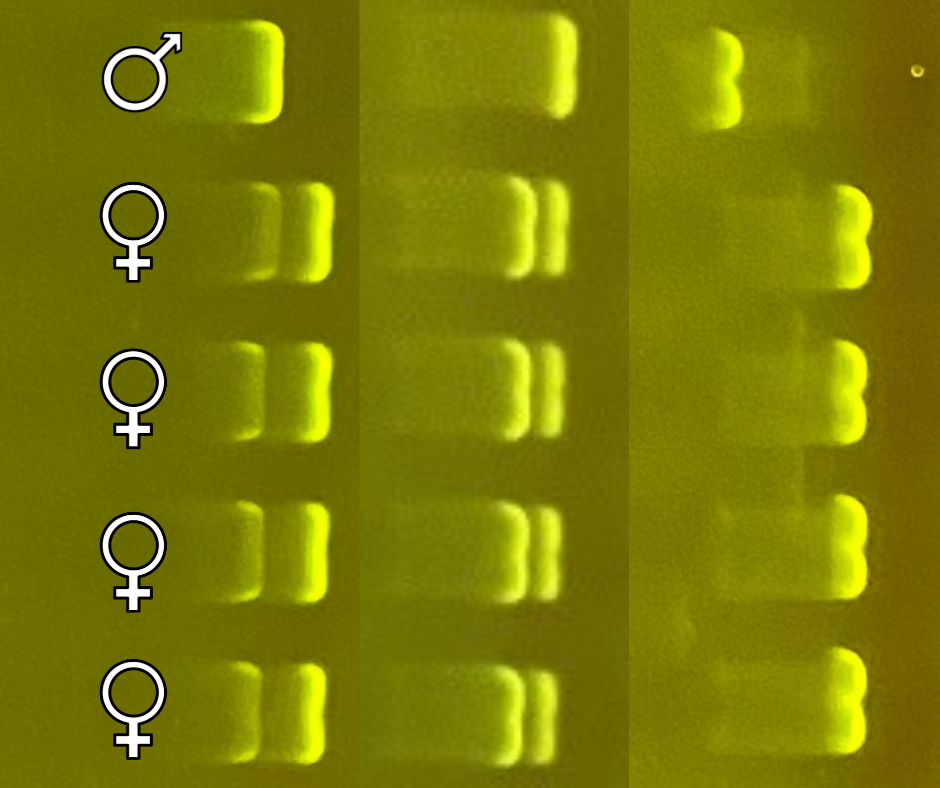
How does sex determination based on genes (Z and W chromosomes) work?
Birds have Z and W sex chromosomes. Females have a different pair of chromosomes (ZW), while males have the same chromosomes (ZZ). Our method focuses on the gene CHD1. Because this gene is of a different length on each chromosome, laboratory analysis will allow us to identify whether it is male or female.
Analysis process:
Amplification: the CHD1 gene is amplified (amplified) using PCR.
Analysis (gel electrophoresis).
Interpretation of the result:
If the DNA of an individual contains CHD1 genes of equal length - it is a male (ZZ).
If the individual's DNA contains CHD1 genes of different lengths - it is a female (ZW).
This DNA analysis is a reliable way to determine sex in birds.